
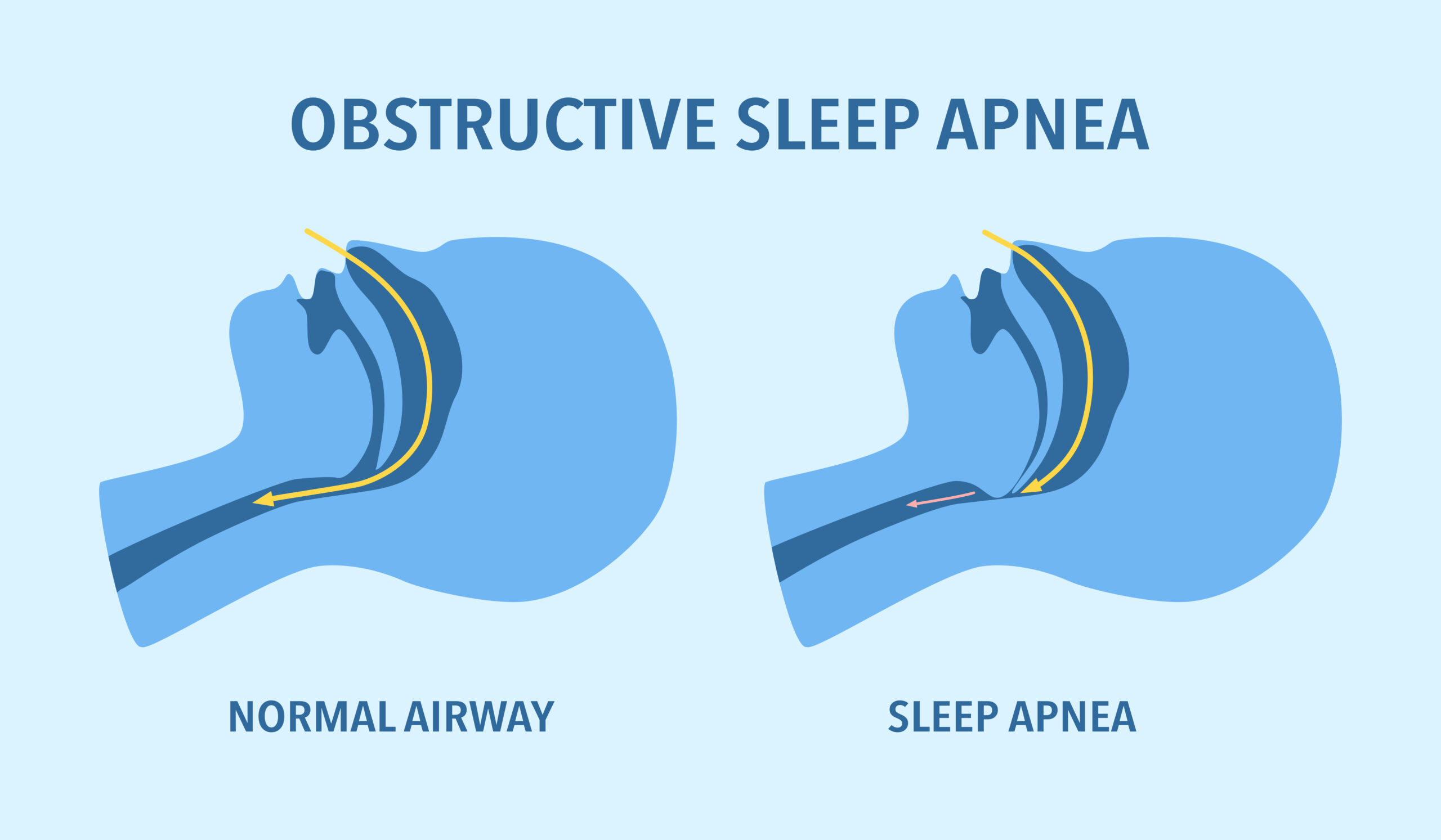
Waking up exhausted after a full night’s sleep signals something fundamentally wrong with how you breathe during the night. Sleep apnea affects over 22 million Americans, causing repeated breathing interruptions that starve your brain of oxygen and leave you struggling through your days with chronic fatigue, brain fog, and serious health risks.
Airway-focused dentistry at Rose Dental in Tucker, GA, addresses the structural cause of many sleep apnea cases rather than just managing symptoms with machines. Dr. Zina Aaron uses advanced diagnostic tools, including our Plan Meca Viso G7 cone beam CT scanner, to identify how underdeveloped jaw bones restrict your breathing passages, then expands these structures to create the space your body needs. Our holistic approach to sleep apnea treatment recognizes that correcting jaw dimensions can eliminate breathing problems at their source and may free you from dependence on CPAP devices.
Why Your Jaw Structure Affects Your Breathing
Most modern humans have underdeveloped jawbones compared to our ancestors who ate nutrient-dense diets. This generational nutritional deficiency means your upper jaw (maxilla) sits too far back in your face, and your lower jaw (mandible) didn’t grow to its full potential size. The result creates a cascade of breathing problems.
Your tongue grows to full size regardless of how much room exists in your mouth. When your jaw bones are too small, your tongue has nowhere to go. During sleep, when your muscles fully relax, your tongue falls backward into your throat because it doesn’t fit properly in your mouth. This blocks your airway and causes the breathing pauses characteristic of sleep apnea.
The nasal septum also suffers from cramped jaw development. This cartilage structure separating your nostrils connects to the roof of your mouth. When your upper jaw remains narrow, it puts pressure on the septum and causes it to deviate to one side. Most people breathe better through one nostril than the other because of a deviated septum. Poor nasal breathing forces mouth breathing during sleep, which further contributes to airway collapse.
How Jaw Expansion Opens Your Airway
Airway-focused dentistry takes a fundamentally different approach than traditional sleep apnea treatment. Instead of using a CPAP machine to force air through a restricted airway, we expand your jaw bones to create the space your tongue and soft tissues need. This addresses the structural problem causing your breathing issues.
We expand both the upper and lower jaws, moving them forward and outward. This expansion creates room in two critical areas. First, your tongue now fits comfortably in your mouth without protruding into your throat when you sleep. Second, the upper jaw expansion relieves pressure on your nasal septum, allowing it to straighten and improving airflow through your nose.
The expansion process uses specialized appliances that apply gentle, consistent pressure to gradually widen your jaw bones. Unlike braces that just move teeth, these appliances actually remodel the bone structure. Your body responds to this pressure by building new bone, permanently increasing the size of your jaw and the space available for breathing.
Upper Airway and Lower Airway Improvements
Opening your upper jaw provides immediate benefits to your nasal breathing. As the maxilla widens, the palate (roof of your mouth) expands, which directly increases the width of your nasal passages. The septum gains more room to align properly, and you may notice you can breathe more easily through both nostrils.
Better nasal breathing matters because your nose filters, warms, and humidifies air before it reaches your lungs. Mouth breathing bypasses these protective functions and often leads to dry mouth, gum disease, and increased infection risk. When we restore proper nasal breathing, your entire respiratory system functions better.
Lower airway improvement comes from creating space for your tongue. With adequate room in an expanded jaw, your tongue rests in its natural position against the roof of your mouth. This position keeps your tongue forward and prevents it from blocking your throat during sleep. Many patients report an immediate reduction in snoring once their tongue has proper space.
Advanced Diagnostic Tools Reveal Hidden Airway Problems
Traditional dentists use regular X-rays that show only a flat, two-dimensional view of your teeth and jaws. These images miss critical information about your airway dimensions and jaw positioning. Our Plan Meca Viso G7 cone beam CT scanner captures three-dimensional images that reveal the exact size and shape of your airway passages.
This advanced imaging shows us where restrictions exist in your breathing pathway. We can measure the precise dimensions of your airway at different levels and identify exactly how much expansion you need. The high-resolution images also reveal your jaw positioning relative to your skull and show us the optimal direction for expansion.
The cone beam scan provides information impossible to gather any other way. We can see if your tongue has adequate space, whether your soft palate blocks your airway, and how your jaw structure compares to ideal proportions. This detailed diagnostic data allows us to create highly customized treatment plans tailored to your specific anatomy.
Airway Appliances and Expansion Techniques
Several different appliances can expand your jaws depending on your age, bone density, and the amount of expansion needed. Palatal expanders attach to your upper teeth and use a small adjustment mechanism to gradually widen your maxilla. You or we make tiny adjustments to the expander regularly, creating steady pressure that stimulates new bone growth.
Lower jaw expansion requires different techniques since the mandible is a single bone without a center suture like the maxilla. We may use special aligners or appliances that reposition your lower jaw forward while also encouraging expansion. Some patients benefit from combination approaches that address both upper and lower jaw dimensions simultaneously.
The expansion process typically takes several months as your bones gradually remodel. You’ll notice improvements in your breathing before the expansion completes, and these benefits continue increasing as treatment progresses. Unlike CPAP machines that only work while you wear them, jaw expansion creates permanent structural changes that continue benefiting you for life.
Who Benefits From Airway-Focused Treatment
Adults with diagnosed sleep apnea often achieve excellent results with jaw expansion, particularly if they struggle with CPAP compliance or want a more permanent solution. The treatment works especially well for people whose sleep studies show airway collapse related to tongue position or jaw structure rather than obesity or other factors.
Children and teenagers benefit enormously from early airway intervention. Expanding jaws during growth years is easier and more effective than adult expansion, and early treatment can prevent sleep apnea from ever developing. We frequently see children who snore, breathe through their mouths, or have behavior and attention problems improve dramatically once their airways open.
Even patients without diagnosed sleep apnea may benefit if they experience chronic fatigue, morning headaches, teeth grinding, or poor sleep quality. Many people have mild airway restrictions that don’t meet diagnostic criteria for sleep apnea but still significantly impact their health and quality of life. Improving airway function addresses these subtle but important breathing problems.
The Connection Between Airway Health and Whole-Body Wellness
Poor sleep affects every system in your body. When sleep apnea repeatedly drops your oxygen levels throughout the night, your cardiovascular system works harder to compensate. This chronic stress contributes to high blood pressure, irregular heart rhythms, and increased risk for heart attack and stroke.
Your brain requires consistent oxygen to function properly. The oxygen deprivation from sleep apnea may contribute to memory problems, difficulty concentrating, and mood changes. Some research suggests chronic oxygen deprivation may increase dementia risk over time. Restoring normal breathing patterns helps protect your brain function.
Our approach to comprehensive dental care always considers how oral health affects your entire body. Airway problems exemplify this connection perfectly. By addressing the structural issues in your mouth and jaws, we improve your breathing, your sleep, your daytime energy, and your long-term health outcomes.
Transform Your Sleep Quality at Rose Dental
If you struggle with sleep apnea, snoring, or poor sleep quality, airway-focused dentistry may offer the lasting solution you need. Dr. Aaron’s training in biocompatible and holistic dentistry gives her a comprehensive understanding of how jaw structure affects breathing and overall health. Our advanced diagnostic imaging and expansion techniques can address the root cause of your breathing problems rather than just managing symptoms.
We invite you to discover how structural changes to your jaw can transform your breathing and your life. Contact us to schedule an airway evaluation and learn whether jaw expansion could help you breathe better, sleep better, and feel better every day.